
Visit our website and join the mailing list:
Our app is coming soon!

From helping you reach your fitness goals to figuring out how to exercise safely with a chronic condition, learn the top 10 benefits of personal training and why it could be one of the best investments you’ll make in your overall health and well-being.
Most of us work harder in the presence of others. Having a trainer by your side can provide the encouragement, energy and motivation you need to jumpstart your routine. A trainer can also help you set goals, create a plan to accomplish them and celebrate the day you reach them.
Do you find it difficult to stick with a program or habit? A trainer can hold you accountable and help you overcome all the excuses you might use to avoid your commitment to exercise. It’s a lot harder to skip the gym when you know someone is waiting for you.
Fitness can be confusing. There is a lot of information to sort through. Eat this, not that. Cardio before or after strength training? Your trainer can help you find credible information and provide direction on your fitness journey. A trainer can help remove the guesswork so you can put all your energy toward accomplishing your goals.
The gym can be intimidating. Working with a trainer allows you to become confident with how to perform exercises, use machines and navigate the facility. After a few sessions, you will feel ready to tackle the weight room on your own. Even better, an ego boost during exercise can promote stronger self-confidence and self-efficacy, which can help you stick with your exercise program over the long term.
If you are new to exercise or find that some movements are painful, it is worth hiring a trainer to be certain that you are moving in a safe and effective way. Taking the time to learn proper exercise technique can improve your results and prevent annoying injuries.
When it comes to fitness, everyone is different. Your unique body mechanics, experience, goals, fitness level, likes and dislikes can guide your trainer in creating a plan that is specific to your needs. With a program that fits, you are more likely to maintain the habit and see results.
Do you want to run your first 5K or prepare for a backpacking trip? Looking to shave some strokes off your golf game? Your trainer can design a fitness program specific to your sport, which will improve your performance and reduce your chance of injury during the event(s).
Exercise is beneficial for preventing or managing many common chronic conditions such as diabetes, heart disease and hypertension. However, exercising with a medical condition requires additional precautions. A knowledgeable trainer with experience training clients with chronic conditions can design a program that ensures your safety and provides a positive exercise experience.
Our bodies change as we age. Perhaps the exercises you used to do no longer work with your body, or maybe you’ve stopped seeing results. A trainer can help you adjust or adapt your program as you age, which will allow you to maintain functionality and strength.
Believe it or not, exercise can be enjoyable. A savvy personal trainer can make exercise both effective and fun. Group or buddy training can be a great way to increase enjoyment, make exercise social and attain the services of a trainer for a cheaper rate. And simply working with a trainer who you like and respect can be enough to provide you with more gratification from your workouts.
Visit our website and join the mailing list! Our app is coming soon:
P.S. Source: https://bit.ly/2ZegcjW

Though personal training is more mainstream than ever, there are still plenty of people hesitant to hire a trainer. They worry about the cost, they worry about the pain and they wonder things like: Will I look like a complete idiot? Is my trainer going to torture me? These fears are normal, but you shouldn’t let them stop you from hiring a personal trainer. Learn more about the most common fears and how you can get over them.
Personal training can be expensive, costing anywhere from $30 an hour to more than $100, depending on where you live and your trainer’s experience. Yes, it costs, but there are plenty of reasons to hire one and it can be a good investment. If you end up with an exercise habit, long-term weight loss and a resource you can turn to for advice, that’s a pretty good pay off.
If budget is an issue, consider these options:
2. I’m Too Overweight and/or Out of Shape
If it’s been a long time (or ever) since you’ve worked out, hiring a trainer may bring up scary questions:
Remember these things:
3. I Don’t Know What to Expect
“I’m not doing pushups, or swinging some weird kettledrum…And I’m notjumping up and down until I throw up.” That’s what one new client blurted as soon as she walked in the door. She gave a grudging nod when I asked, “You’ve been watching The Biggest Loser, haven’t you?”
In the absence of experience, you may imagine all kinds of scary things that could happen during your personal training session. But, your trainer isn’t going to make you do anything you aren’t ready for.
What you can to do ease your fears:
4. I’m Afraid It Will Hurt
“Is this going to hurt?” Well, if you have to ask…
Seriously, exercise shouldn’t cause pain. There will likely be some discomfort, of course, which is true anytime your body does things it isn’t used to. A few things you can expect when you start exercising:
You shouldn’t feel any actual pain, though. Any sharp, stabbing pain in the joints, muscles or connective tissue should get your immediate attention.
5. I’m Afraid of an Injury
This is a healthy fear, but one that shouldn’t stop you from hiring a trainer. Any movement can cause injury and activities that combine a personal trainer, a new exerciser, heavy equipment and moving body parts can up that risk. Your trainer will do everything possible to avoid this, but there’s no guarantee you won’t get hurt. Here’s how to decrease your risk:
6. I Have Trainer Trauma
If you’ve ever left a personal training session crying, limping, crawling and/or vowing to stop payment on your check as soon as you have the strength to lift your phone, you’ve probably had Trainer Trauma.
Like every profession, personal training has its fair share of boneheads. Some may treat your first session like it’s a contest to see how much torture your body can handle. Some do this because they think that’s what every client wants. Others do it because a client may request that kind of workout without realizing how hard it really is. The result is, at best, Trainer Trauma and, at worst, an injury.
For every bad trainer, there are hundreds of good ones, but you may need to approach your new search with a few things in mind:
7. I’m Afraid of Failing
If you’ve tried to lose weight with diets, exercise programs or other failed ventures, you may be afraid of another weight loss failure. Unfortunately, hiring a trainer is no guarantee of success. A trainer can do a lot of things for you — teach you an amazing variety of exercises, challenge you, give you personalized workouts, track your progress and motivate you. What he can’t do is give you what you most need to have to lose weight: A desire to change.
Sometimes, hiring a personal trainer is no different than trying a new diet or a new fitness gadget in the hopes you’ll find something that will finally work. The problem is, no diet or gadget or personal trainer is going to make any difference if you don’t believe that how you’re living is making you more miserable than having to change it.
Having a standing appointment that you’re paying for and an expert to guide you can certainly be motivating, but it’s no talisman against failure. Before you take the plunge, ask yourself why you want to hire a trainer. Good reasons to hire a trainer: You’re not seeing results, you don’t know where to start or you’re stuck in a plateau. Bad reasons to hire a trainer: You want to lose weight fast, you feel pressured by aggressive salespeople, you want the perfect body, or you think a trainer can magically transform you into the kind of person who is motivated to exercise.
8. I’m Afraid of Committing
Hiring a personal trainer is a big commitment and it’s normal to get cold feet. It’s more than just meeting someone for an hour to exercise, you’re also committing:
9. I’m Afraid of Looking Like an Idiot
When you hire a trainer, you will be expected to do a variety of physical movements and, yes, sometimes these movements will be awkward. Not only that, but your body will have a variety of responses to this physical activity: Sweating, shaking, wobbling or just downright confusing. Some common worries:
10. I’m Afraid I Won’t Like My Trainer
When you’re hiring a trainer, you’re not just looking at someone’s certification, experience and education, you’re also looking at their personality. Most personal trainers can get along with a wide range of people, but not all personalities mesh very well.
Increase your odds of finding the right trainer by thinking about what’s important to you. That might include:
Most important, speak up if things aren’t going well. You may think your trainer should read your mind but, unless you spell it out, your trainer may have no clue you’re unhappy.
Visit our website and join the mailing list! Our app is coming soon: http://fitradar.me/
Source: https://bit.ly/2CCK6mz
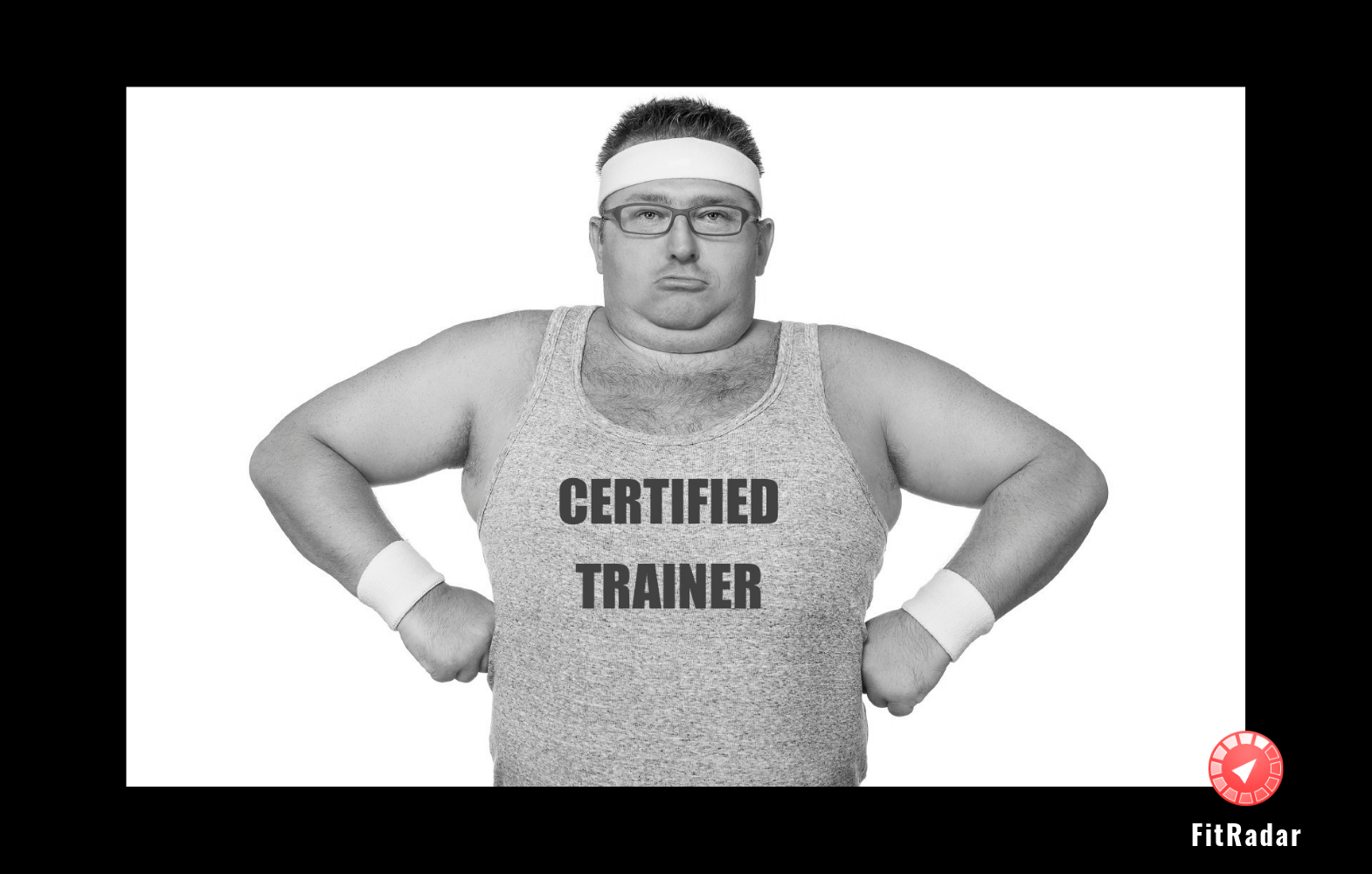
1. Selling or Suggesting Supplements
Selling or suggesting the use of supplements is the biggest and most glaring issue I have with trainers and I know that I will probably get a bunch of angry personal trainers taking issues with this but I don’t care. If a trainer, live or on a video, suggests the use of or even worse tries to sell you supplements, walk away. First, when it comes to fitness and health gains, supplements are not necessary. Secondly, unless you have come across a trainer who is also a doctor they can not legally or ethically give supplement “prescriptions” or suggestions. The only reason supplements are promoted at all is because of money. Supplements are a multi-billion dollar business and most of the hype and “benefits” of supplementation come from the mouth of the people who make and sell them.
2. Body Shaming to Motivate
There are many ways to motivate a client to exercise but the most mentally detrimental way to motivate is by shaming someone into action. Body shaming especially breeds all kinds of disordered thinking, feelings of guilt, and inadequacy. If a trainer uses these type of tactics to motivate they are not looking out for your best interests for long term health. If a trainer belittles your physical appearance to try to get you to exercise or to adhere to a specific diet then drop them and look for a trainer that motivates you by making you think more positively and constructively about yourself, your body and your physical ability.
3. Only Promoting One Training Style
There are hundreds of exercise training styles out there from Olympic Weightlifting, Plyometrics, Agility, Mass Building, and Toning, to Cardiovascular, HIIT, Yoga, Pilates and Flexibility (just to name a few). All of these styles have pros and cons but there is no shortage of trainers that will argue to the death that their preferred style of training is better than all the rest. It is a narrow-minded and short-sighted trainer that thinks that everyone should train the same way or with only one training style. For overall health you need to exercise in different ways to challenge the different physical abilities of the human body, for strength, endurance, flexibility, coordination, balance, agility, etc, etc. Depending on your own personal goals you may want to lean slightly more towards one training style than another but never focus on just one. Any trainer that does not look at the whole picture is not one you want to train with.
4. Don’t Properly Develop Workouts
This is a bit harder to explain but very important when it comes to the effectiveness of a trainer. Not all programs are created equally and many trainers don’t check their programs for balance. Not the standing on one foot kind of balance but rather balancing the body front to back left to right, and top to bottom. For example, I was watching a workout video the other day by a well known and well-funded trainer and I was watching them do a squat in a circle where one foot stayed stationary and the other took steps forward to complete a circle. They did a couple of sets and the whole time I was waiting for them to switch directions and step backward but they never did and to top it off they never even switched legs. Another good example would be a workout video by a well known YouTube trainer who starts their warm-ups with deep pile squats to start with which is much too rough of a range of motion on cold muscles and joints, and just asking for an injury or pulled muscle, purely due to poor programming. These might seem like small things to nitpick but using a trainer that does not think about the balance of the body’s muscles can easily lead to muscle imbalances which can cause chronic issues or can increase your likelihood of injury.
5. Promote Weight Loss Before or Instead of Muscle Building
Trainers who only focus on weight loss and not muscle/strength building are doing clients a huge disservice. Those who only focus on sheer calorie burn through cardio, toning (lightweight training), or core exercises, as their only form of exercise, are working with a limit to how much they can burn and typically have to heavily restrict caloric intake to see progress. On the other hand, if you start with strength training to build a good base of muscle you can increase your resting metabolism as well as max calorie burn for any given exercise, therefore, burning more calories with the same relative level of effort. Your body’s Basal Metabolic Rate (BMR), the rate at which your body burns calories just keeping itself alive, is set not only by your body’s natural functions but also by the amount of muscle tissue you have. So, if you add more muscle tissue you add more calorie burn potential both during exercise and daily life activities. This increased BMR due to more muscle mass makes it easier to not only drop fat weight but to also keep it off in the long run. The best thing is that it does not take much muscle mass to make a huge difference in the number of calories you need in a day. So, especially for any ladies out there who are worried about getting too bulky or masculine from weight lifting remember that a little goes a long way. If you are trying to lose weight and your trainer only does lightweight training, cardio or core exercises it does not necessarily make them a bad trainer just one that will be less effective for helping you lose fat content (and keep it off).
6. Focus on Intensity Over Form
This issue is especially prevalent with the bodybuilder culture as well as some of the boot camp style trainers out there. Many of them will choose to focus on how much you lift or how hard you push yourself over all else. We have nothing against pushing yourself or wanting to lift heavy but what we can not agree with is letting form and proper technique slide just to lift a bit more weight or push for a few more reps or seconds. Proper form is by far the most important aspect to focus on during any type of training. If the form is not maintained then the returns from that exercise or movement start to diminish quickly. One thing I see a lot especially with weight lifters/bodybuilders is a limitation of range of motion so they only target the strongest portion of their range rather than moving to a lighter weight and moving through their entire range of motion for maximum muscle development. Not only can this create or intensify weak spots but it can also change posture and joint tracking which can cause long term issues with chronic pain, discomfort, and overall joint stability. If a trainer knows what they are doing they will always know when to lower intensity to favor better function and long term results. So, if you have a trainer that tries to push you past your comfort zone or does not teach proper form look for someone else.
7. Trainers that don’t Educate or Empower Clients
There are some professionals, found in any industry, who feel that you should give just enough information to keep a client coming back so they can fill up their schedules and make more money. I believe that, ethically speaking, this is a huge flaw if you’re actually trying to help someone. With our videos now and back when I was still doing one on one training and group fitness classes I would aim to teach clients everything they need to know to be a more active participant in their own health and fitness. I want each person to know why they are doing each exercise and why they are doing them in that specific order. It was my goal as a trainer to teach a client to the point that they did not need me anymore, which sounds stupid if you are trying to make money but if you have a trainer that really wants to change people’s lives and help long term then they won’t get caught up in the money. However, if you teach a person well, they will not only be empowered, they will also trust you and know that you have their best interest in mind, which may make them more likely to use your services anyways.
8. Believe In or Promote Spot Reduction
This has two sides to it, number one is just literally a trainer that believes that spot reduction is possible and tries to sell you on it. It is not possible, and a trainer that tries to tell you otherwise you need to avoid. The second part of this is a trainer that dispenses any false information either willingly or unknowingly (for example women should not lift weights, low-intensity exercise burns more fat, if you exercise you need more protein supplements, ab exercises burn belly fat, or cardio is the best way to lose weight). It comes down to the facts that they are either intentionally lying and will say anything they need to make a quick buck or they are not educated enough in their field to be a safe, or effective trainer. Either way if you hear a trainer saying something double-check it until you know they can be trusted, especially if it sounds too good to be true.
9. Promise Quick Results
Many people start into an exercise routine with the hope that it will be easy to hit their goals as long as they put in some effort for a while. I know that it can be discouraging to some to hear that they are not going to drop 10 pounds in a week without serious health repercussions and that they need to realise that exercise and health are things that need to be a permanent part of their life. Infact I have lost a number of potential clients because I have told them that their goals will take longer to reach than they want. A good trainer will make the hard decision to address false hopes and help people set new attainable ones. Whereas a bad trainer will keep their mouth shut just to get a paycheck or even worse plant that false hope just to close the deal. Improving physical ability takes time, weight loss takes time, gaining flexibility or balance takes time and anyone trying to tell you otherwise will never have your best interests in mind.
10. Talk about Lower Abs
This is a very specific one and really falls under dispersing false information but it is one that really bothers me. Any trainer that says they are going to show you an exercise to work on your lower abs does not know what they are talking about. There is no such thing as lower abs! I could go on and on forever about this but I am not going to in order to keep this short. If you want to know the specifics then let me know in the comment section and if enough people are interested then I will make another article and vlog about it. But for now lets just keep it at, if you hear a trainer talk about working the lower abs, they are a either completely clueless as to how the human body works or they are just trying to tell you what you want to hear.
I hope my list helps you find great trainers to help you and more importantly helps you avoid the bad ones. Afterall there is more at stake here than just your waistline. Finding the right well educated personal trainer can be the difference between becoming a happier, stronger, fitter, smarter individual or becoming a person who hates exercise, and feels that they will never succeed. There are many good trainers out there, and finding one that works for you can make a huge positive impact on your progress towards your goals and overall outlook on health and fitness.
Remember that this is just my opinion and if you think there is something else that should be on this list please include it in the comment section below as I would love to hear it. Also if you don’t agree with any of my top ten let me know which one and why.
P.S. Visit our website and join the mailing list! Our app is coming soon:
Source: https://bit.ly/1lNl5xl

People use personal trainers to assist them reach their individual health and fitness goals. A personal trainer will tailor an exercise program to meet your goals and personal health needs, teach you the best way to exercise and motivate yourself.
Good places to start looking for a personal trainer include local gyms, health centres or fitness centres. When you’re at the gym, watch trainers with their clients and see how they interact. Make a note of trainers who get along with their clients and seem fully involved in their workouts. Ask friends and workmates for word of mouth recommendations.
Take your time before you make your final choice. Make sure your personal trainer is qualified before entering into any agreement.
While professional credentials and experience are vital, it helps to rate personality and communication high on your list of priorities as well. You may be spending a lot of time with this person.
Role of a personal trainer
A personal trainer should have relevant qualifications and be registered with a recognised industry association. A personal trainer’s job is to work with your health and allied health professionals, discuss your goals, assess your fitness level, design a program for you and help keep you motivated.
A personal trainer can:
Personal training qualifications and experience
It is a good idea to:
Choosing a personal trainer
When making your choice, factors to discuss with the personal trainer include:
Other things to consider include:
Consider some more personal aspects that relate to the relationship with your trainer. Trust your instincts about the impressions the trainer makes upon you. Your personal trainer will ideally be:
Beware of dubious personal trainers
If you’re concerned about the qualifications of an exercise professional, ask to see their proof of professional credentials, or you can check if they’re registered with Fitness Australia. Occasionally, trainers have been known to be unethical, even though they have the correct credentials. Generally speaking, warning signs of a personal trainer who is unethical include that they:
Our app will help you find a personal trainer. Visit our website and join the mailing list:
Source: https://bit.ly/2NENA2Q